Friday, 28 January 2011

# 043 Malay Technology Museum - Gallery 1 & 2


Padian -


TUGU
Tugu is a fishing trap used only in swift flowing water, normally located near the mouth of a river leading to the sea. A Tugu is made of a row of Jarings ( nets) that are attached to wooden columns and each jaring is divided into five parts, compose of Panir (entry point ), pilayu(front section), badan ( the trunk, middle section),pengambangan ( "inflated section") , and candek( endsection). The setting up of A tugu is done by two or three fishermen at the time when the tide is low. After completion of the setting up the jaring, the fishermen leave the tugu for few hours, then come back to haul each jaring one at a time into the boat. When candek of each jaring is hauled into the boat, one of the fishermen unfastens the knotted candek to load the catch on to the boat floor.

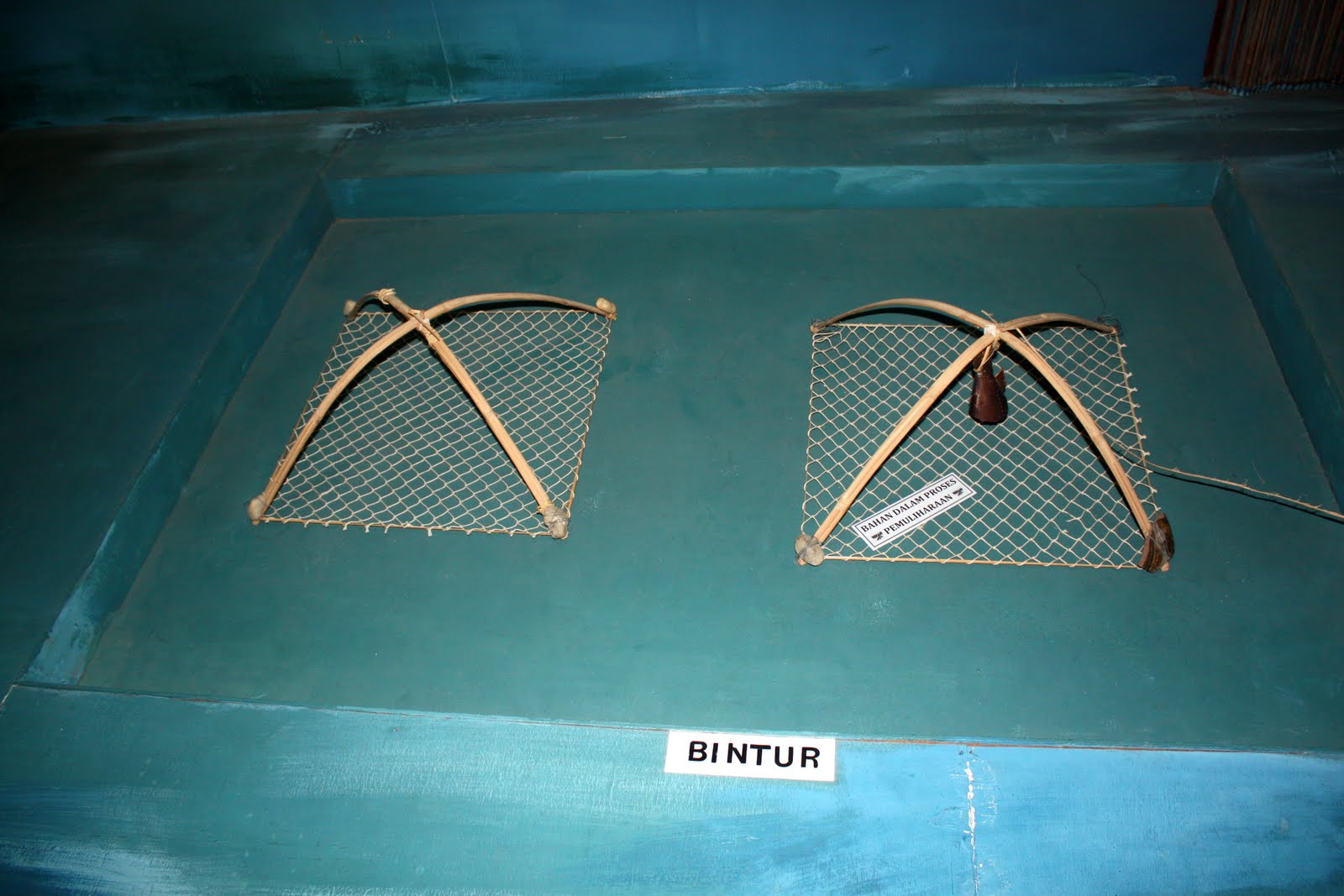


Bintur - Crab's trap


TRADITIONAL ROOF-MAKING
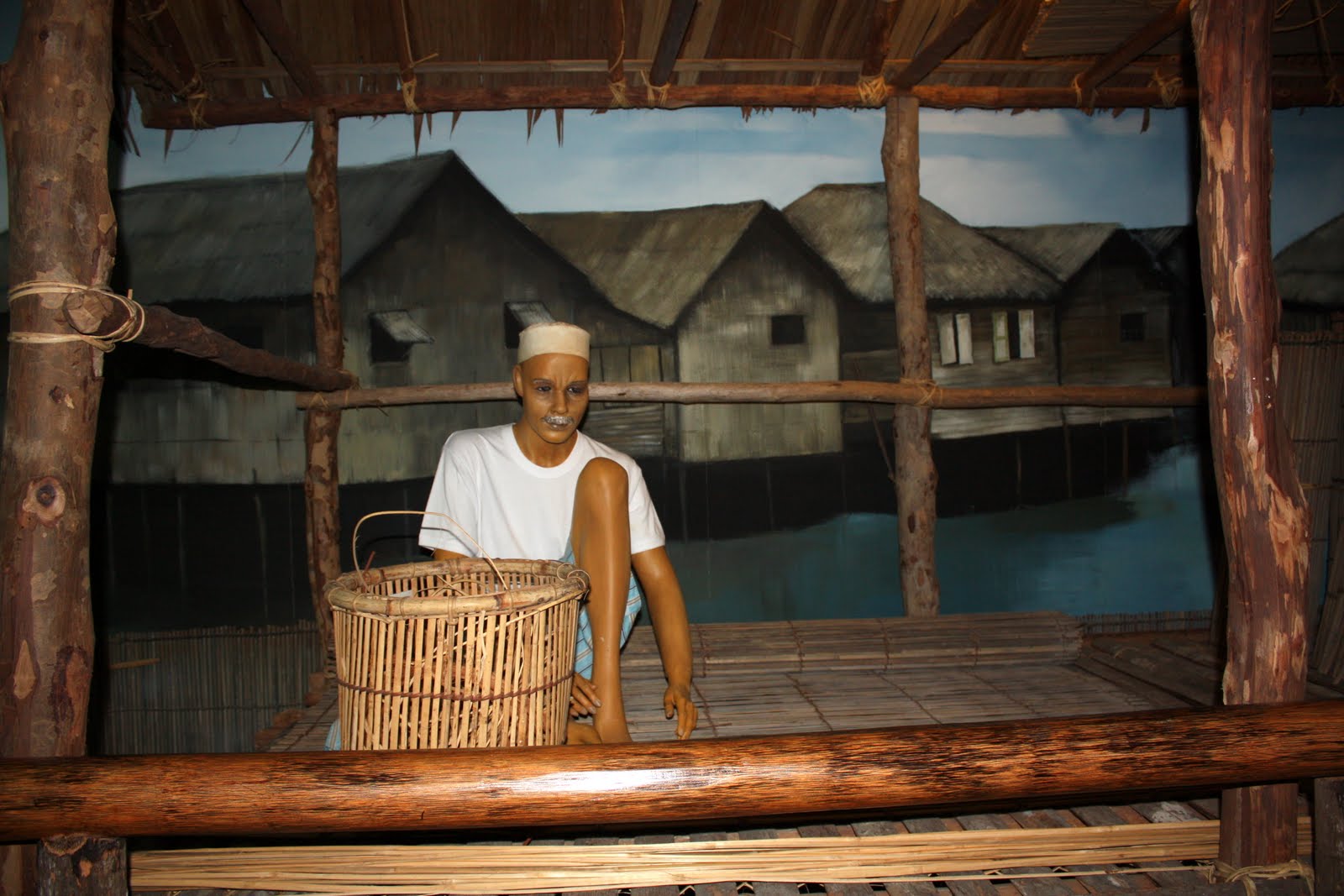
Thatched roof of a traditional Malay house was usually made of nipah fronds ( Nipahfruitcana )where the palm grew in abundance along Brunei river banks. Before the coming ofwood shingles and later metal roofing brought by Chinese craftsmen, roof supply and maintenance were exclusively provided by Kampong Panduan ( roof-making Vilage ), in Kampong Ayer, now no longer exist. Roof-making was usually done by women folk and nipah leaves gathering was tasked to men.



Thursday, 27 January 2011

# 042 My photo trip to Malay Technology Museum, Brunei - Introduction

The Malay Technology Museum building was contributed by The Royal Dutch/Shell Group Company to the Government of His Majesty the Sultan and Yang Di-Peruan of Brunei Darussalam to commemorate Brunei Darussalam's full independence in 1984. The museum was officially opened on 29th February 1988 by His Majesty Sultan Haji Hassanal Bolkiah Mu'izzaddin Waddaulah, the Sultan and Yang Di-Pertuan of Brunei Darussalam.

The Malay Technology Museum exhibits various types of traditional technologies utilised by the indigenous people of Brunei darussalam. It mainly showcases of traditional crafts used by the former highly centralised and stratified Brunei Sultanates which are based on maritime economic activities. This was complemented by simple technologies used by various indigenous Brunei ethnic groups whose lifestyle were basically egalitarian economic activities ranged from swidden rice cultivation and animal domestication to food gatherings and hunting.

The Showcase comprise of three galleries :

Gallery 1
Kampong Ayer's Traditional Houses

The gallery exhibits six model of traditional house found in Kampong Ayer ( Water Villages )that were popular in late 19 th centuary until mid 20th centuary, namelyBelah Bumbung House,Loteng House,Belah Bumbung Berserambi House,Potong Limas House,Belanggar House and Tungkup House. The evolution on the use of constraction materials was reflected in their structural designs, thus providing historical records on their architectural influences.

Gallery 2
Kampung Ayer's Traditional Technologies

The Gallery exhibits several models of fishing traps and traditional cottage industries of Kampong Ayer , namely cloath-weaving,boat-making,gold,iron and silver -smithing as well as brass-making. The gallery also exhibits products of these traditional cottage industries.

Gallery 3
Traditional Technologies of other Indigenous Ethnic Groups

The Gallery exhibits the traditional industries of indigenous people of Brunei Darussalam who settled on land , particularly,the interior highlands ( vis-a-vis the river-dwellers of the Brunei water villages ) such as sago-making,suger-processing,simple technologies used in rice cultivation, tops and blowpipes making.The gallery also exhibits model of traditional house of Dusun and Kedayan and the Murut longhouse and the Penan makeshift jungle hut known as Lamin Tana.

Tuesday, 11 January 2011

# 040 FDC ......Brunei Turtles - PENYU


Green Turtle / Penyu Kangkam
( Chelonia mydas )


Hawksbill Turtle / Penyu Sisik
( Eretmochelys imbricata )


Olive Ridley Turtle / Penyu Lipas
( Lepidochelys olivacea )

The National Turtle Management and Conservation Program ,
Negara Brunei Darussalam
Introduction :
Throught the world, there has been a decline in the turtle population. The region and Brunei Darussalam are not spared from this threat of the decrease in the numbers.Consequently, various steps and activities are put forward to adress the issue. Marine turtles are protected under Appendix I of the Convention on International Trade of Endangered Species( CITES ).
Out of the seven species found in the world , only three are known to land and nest in Brunei Darussalam beaches, namely Green Turtle, Hawksbill Turtle and Olive Ridley Turtle.
National Turtle Management and Conservation Program
The programme has the following objectives:
  • To manage for the maintenance of marine biodiversity
  • To manage for the increase in turtle population
A national Comittee on Turtle Management and Conservation Programme has been formed to implement proposed activities. The Committee is chaired by Director Of Fisheries and its members include representatives from various government agencies and the private sectors.
Various strategies and steps have been planned and some have already been implemented.
  • Hatching of turtle eggs : Since the early 1990's , the department of Fisheries has successfully hatched turtles eggs using artificial method. Spurred by the success and at the sametime overall concerned in the declining of turtle population, the department has embarked on various projects to increase the population.Beaches known to be turtle ground are monitored.Turtle eggs found are moved to a safer place near the actual nests where predation will be reduced. The eggs is monitored during the incubation stage. ( usually two months )
  • Baby turtles or hatchlings are released to the sea.The Department Staff and volunteers from NGO's and schools have been participating in the released of this hatchlings to the sea.
  • The Department of Fisheries has conducted several seminars and talks to various both government and private schools namely Saydina Hussin Secondary School, St' Andrews School, Jerudong International School, Jigsaw School ,Tadika Alif, and Duli Al-Muthadee Billah College.
  • The Department has started a project to enlist the public to become TURTLE VOLUNTEERS. The response has been very overwhelming. School children, youths and CONSERVATIONIST have come forward to register themselves.
  • The National Committee on Turtle Managemant and Conservation Program has chosen a slogan ' SAYANGI PENYU KITANI ' ( LOVE OUR TURTLES) to inject public awareness.
Text: Courtesy of Department of Fisheries,BRUNEI
Text date : November 2001

Monday, 10 January 2011

# 039 FDC


From top clockwise :

Stork-billed kingfisher, Common kingfisher , Blue-eared kingfisher ,
White-collared kingfisher


Blue-eared kingfisher ( Alcedo meninting )
local name :Burung Pekaka Bertelinga Biru )
Small kingfisher with deep iridescent blue head and wings, metallic light blue on back and tail, white ear-patch ,white chin, rufous underparts, red legs, bill may be red or black with red near base. Habitat : Frequents forested stream,rivers,lakes and mangroves. Often seen perched low down overlooking water to hunt small fishes which its secures with lightning dives before returning to the same perch.Generally shy but can be seen flying low just over the water surface.

Common kingfisher ( Alcedo atthis )
local name :Burung Pekaka Biasa
One of the smallest kingfisher in the region. Head ,mantle and wings bluish,back iridescent blue.ear coverts and underparts rufous, white behind ear coverts and chin, bill black with tinges of orange; leg red. Habitat: Owing to its size and habits, often hard to detect in its preferred habitats of forested streams, mangroves and other wetlands. Occasionally seen flitting accross the water giving a high-pitched peep, or perched silently low down overlooking water in persuit of prey.


White-collard kingfisher ( Halcyon chloris )
Local name :Burung Pekaka Berkolar Putih
Unmistakable bird with bluish- green head, upperparts and wings, and a white collar adjoining white underparts.Black eye-stripe not prominent at times. Bill grey and flesh-coloured. HABIT/HABITAT: Usually encountered in mangroves,beach scrub and plantations.Has a varied diet ,ranging from small crustacean to small reptiles and amphibians. Probably the most vocal of the kingfishers with harsh, loud territorial calls of repeating clusters of 2 - 4 shrieks.

Stork-billed kingfisher ( Pelargopsis capensis )
Local Name :Burung Pekaka Berparoh Botak )
Large kingfisher with a massive red bill. Brown head with a light orange / rufous nape , throat, underparts and vent; dull bluish-green wings and tail; red feet.
HABIT/HABITAT; Solitary and rather silent kingfisher, often spotted perched in mangroves , wetlands and forested rivers. Diet mainly of fish , small insects and amphibians.

# 038 London, UK


# 037 Brighton, UK


Back in 2009

Saturday, 8 January 2011

# 036 Little Egret ( Egretta garzetta ) Bangau Kecil ...55 - 65 cm


Slim, very active egret, slightly larger but thinner necked. Non breeding birds sport slender black bill,legs and feet. Breeding birds develop head,back and breast plumes. Habitat in both natural and man made wetlands.

Kemaskinikan kawasan ,